Some useful applications that I found interesting to use in future work as a digital historian is the website builder Squarespace. It provides software to build websites, and allow users to use pre-built websites templates and drag-and-drop elements that allow anyone to make a website for a business, personal, or blog without any programming experience to create and modify websites. This website could be used to create a blog for a class or for class projects.
Crowdsourcing is the practice of getting information or input into a task by using the services of a large number of people, typically on social media sites and the internet. People involved in crowdsourcing either work as paid freelancers or on a voluntary basis.
One of the most accomplishedcrowd-influencestart-ups is Waze. It’s an app that permits users to reporttraffic jams and automatically gives directions for the bestroute to take.
Waze crowdsourcesinformation by measuring drivers' speed to determinetraffic jams and by asking users to reportroadclosures.
It’s a great app that proves a dedicatedcrowd is sometimes all a companyneeds.
The two online data sets I would suggest is the Virginia Elections Database which shows how many people voted in Virginia in a particular election whether state or local. The second set I would suggest Estimated Population of American Colonies 1610 to 1780. Which shows the early colonies population through the year. Both these data set can be used in a data visualization project.
This data visualization shows the trajectories of the 1,000 plusorbitingearth now. Each satellite is depicted by a circularicon, color-coded by country, and sized according to launchmass.
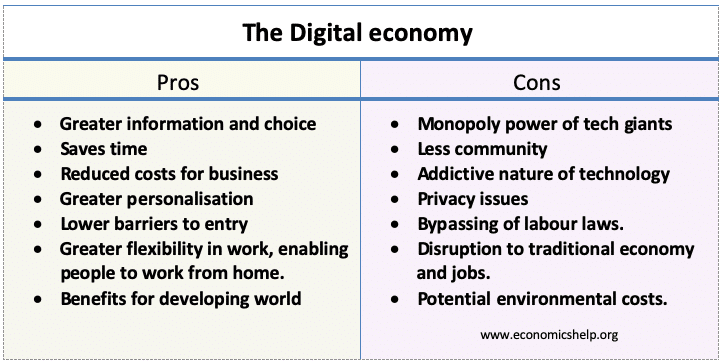
My thoughts on the digital world is that line between reality and non-reality (fantasy) is increasingly disappearing. With the development of Virtual Reality, Artificial Intelligence, 3D Printing, Augmented Reality, Nanorobots, and many more digital technology advancements, we are losing a sense of what is reality or fantasy. For example, deep fakes,are synthetic media in which a person in an existing image or video is replaced with someone else's likeness. My exposure to deep fake is a video Buzzfeed did on Barack Obama explaining deep fakes and saying uncharacteristically things. With the increase of deep fakes and easy to access apps to create them, anyone can cause a revolution, war, security threats, or ruin reputations, etc.
The National Museum of Finland opened a new VR exhibit in 2018. Visitors can travel back in time and feel as if they are inside the painting. They can even speak with the characters depicted in the painting.
My local library is the Potomac Community Library. One of the many useful databases this library has to offer is an ACADEMIC OneFile SELECT.Which holds several thousand of scholarly and professional journals and periodicals available in full text. Which can help with research assignments and essays.
A nova database I found to be useful and educational is the African American Biographical Database (AABD) which includes profiles and full-text sketches providing both biographical detail and illuminating narratives chronicling the lives of Black Americans. Something I'm interested in learning.
The library of Virginia databases I found to be useful is ReferenceUSA. Which is a U.S. business and residential directory, That allows users to generate lists of businesses by location and other variables such as business type, sales volume, number of employees, and year established. Which I'm sure I will use as I progress in my educational career since I'm an accounting major.
I find the advancement of digital history fascinating because, before technology, you would search through books on shelves at your local or school library to find information about something. You would flip through encyclopedias, thesaurus, research textbooks, etc. hoping it contains information you needed. Now we live a more advanced technological society that most information you need is on the internet.
In this week's reading, it provides insight on what draws an audience and what format style can make or break a reader's attention. To keep readers' attention it is recommended to provide the readers with an organized and clear format by placing importance on key points.
In Rosenweig's reading, we are provided with some general principle of design such as:
- Text
- Images, Color, and Multimedia
- Site Structure, and Good URLs
- Accessibility
Some things I Found Interesting in this week's chapter:
After reading the chapter I was inspired to change up my own blog to make it engaging and esthetically appealing to the eye. As I post more this semester I plan to change up my blog to keep the reader engaged and informed.
A blog is a regularly updated website or web page, typically one run by an individual or small group, that is written in an informal or conversational style. It can be used to post opinionated or factual thoughts. Some examples of blogs are A CUP OF JO, The Skimm, or Advice from a Twenty-Something. Blogs can be used as a website to study history such as Civil War History The Blog Between the States. a website that documents the Civil War period.
I follow the American Historical Association on twitter. I also follow Native Hope on twitter because they are a non-profit organization that wants to dismantle barriers, heal and inspire Native people.
I follow the Rediscovering Black History blog because there is little to no attention brought to black history and the lack of it taught in schools. This blog shares any historical experience within the African diaspora.